
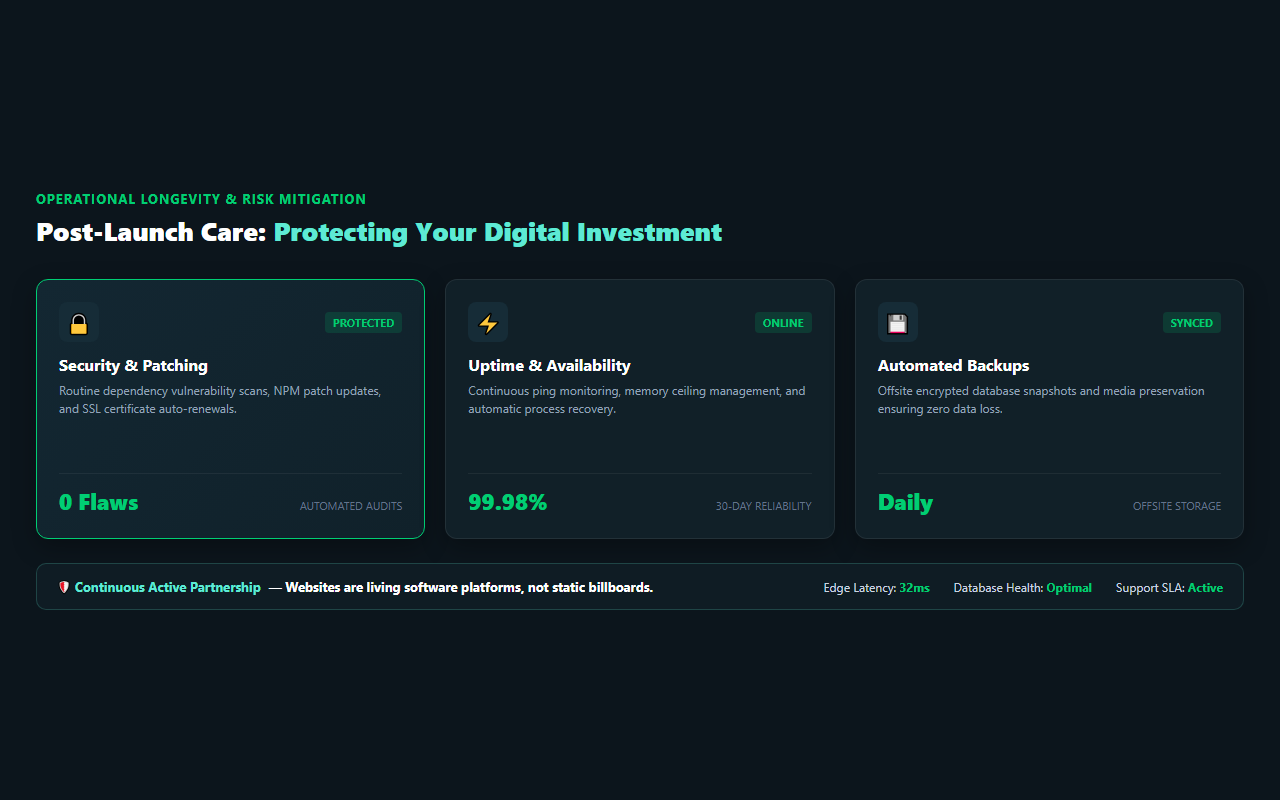
1. Security Patches and Dependency Maintenance
Modern web applications depend on various software libraries, frameworks, and server operating systems. Over time, security vulnerabilities are discovered in older packages. Without routine dependency audits, a website that was secure on launch day can become vulnerable to automated exploit scripts months later.
Routine maintenance keeps software packages updated, database queries patched, and server firewalls current.
2. Search Engine Relevance and Content Freshness
Search engines like Google prioritize websites that demonstrate ongoing activity and relevance. When a website displays copyright notices from three years ago, broken links to discontinued services, or outdated phone numbers, both search algorithms and human visitors conclude that the business may no longer be active.
Adding regular project case studies, updating service descriptions, and publishing helpful business insights signals to prospective clients that your company is thriving.
3. Adapting to Real User Behavior
Launch day is the first time real prospective clients interact with your website. In the weeks that follow, analytics and customer feedback reveal what visitors actually care about. Which services get the most clicks? Where do visitors drop off? What questions are they asking in the inquiry box?
Ongoing attention allows you to refine calls-to-action, clarify confusing headlines, and optimize high-traffic pages to turn more casual visitors into paying clients.